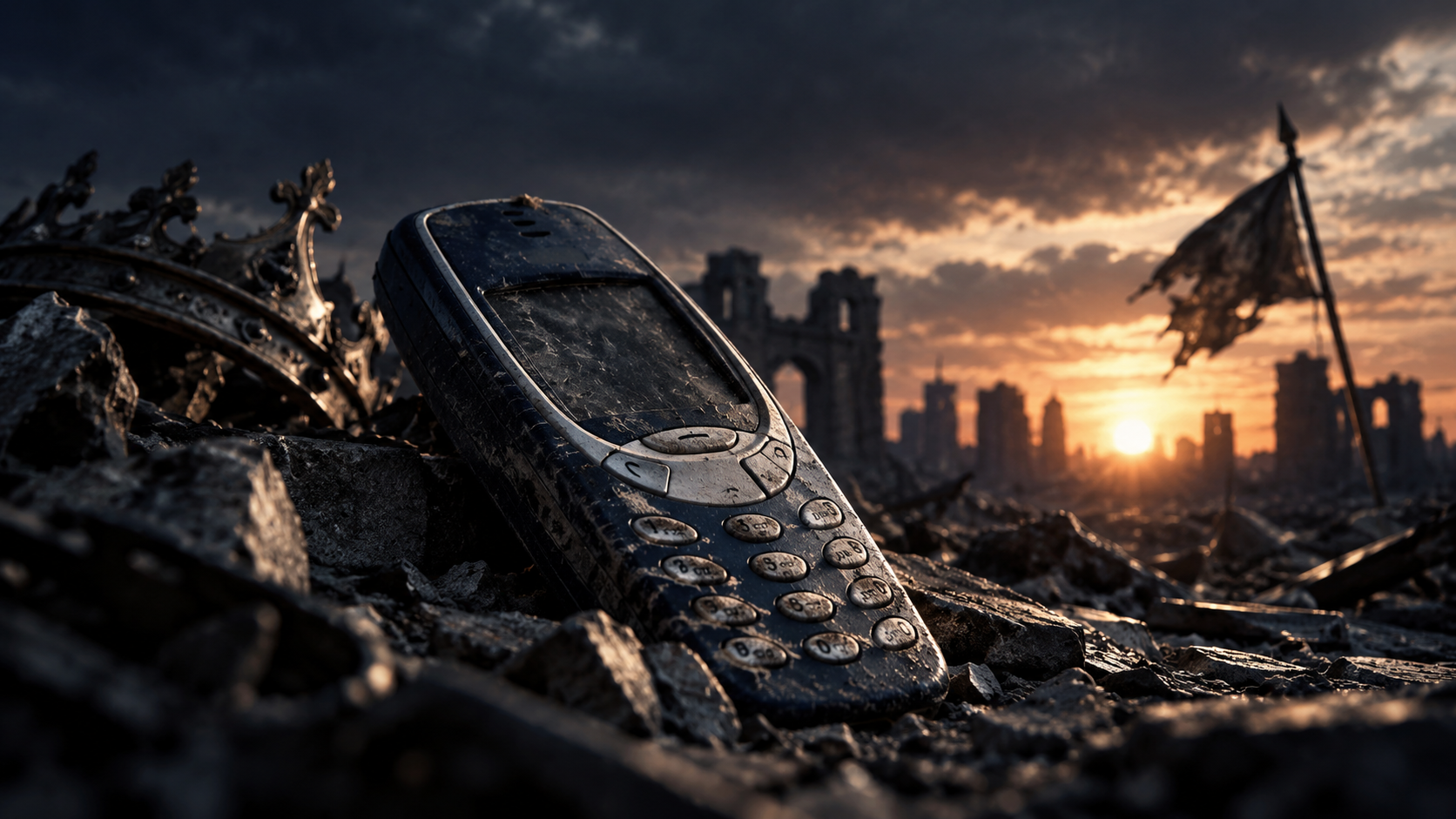
Nokia’s story is a fascinating saga of rise, fall, and reinvention. Founded in 1865 as a paper mill in Finland, Nokia evolved over decades into a global telecommunications leader. By the late 1990s and early 2000s, Nokia held an unmatched 40% share in the mobile phone market, defining the mobile experience for millions worldwide. Known for its reliable, user-friendly phones, Nokia was synonymous with innovation and Finnish pride.
However, the rapid emergence of Apple’s iPhone and the Android ecosystem in the mid-2000s transformed the mobile landscape. Nokia’s struggle to adapt to the smartphone era, coupled with strategic missteps and a complicated partnership with Microsoft, led to a sharp decline. By 2013, Nokia had sold its mobile division to Microsoft, marking the end of an era. Yet, since 2016, Nokia has refocused on telecommunications infrastructure, networking, and 5G technology, with a return to the mobile market through a licensing deal with HMD Global, setting the stage for a new chapter in its storied journey.
The Nokia Phenomenon
More than a brand, Nokia became a global icon in the 2000s, known for creating durable, affordable, and reliable devices. Among its lineup, the Nokia 3310 achieved legendary status for its “indestructible” build, long battery life, and simple design - qualities that continue to resonate in pop culture and internet memes.
Nokia’s cultural significance extended beyond hardware. The familiar ringtone, the addictive “Snake” game, and its universal accessibility made Nokia phones part of everyday life for millions. In Finland, Nokia’s success symbolized national pride and economic growth, putting Finnish innovation on the world map. Today, Nokia’s legacy endures not just in nostalgia but as a symbol of resilience, reinvention, and the lasting impact of tech pioneers.
In this blog, we’ll cover:
1. Origins and Foundation
Founding in 1865: Nokia’s Beginnings as a Pulp Mill in Finland
Nokia’s origins trace back to 1865 when engineer Fredrik Idestam established a pulp mill near the Tammerkoski Rapids in Tampere, Finland. At the time, Finland was still part of the Russian Empire, and the economy was primarily agrarian, with industries limited to small-scale manufacturing and resource processing. Idestam’s mill capitalized on the abundant Finnish woodlands, converting timber into paper pulp - a crucial raw material as Europe’s demand for paper surged.
Industrial Finland in the Mid-19th Century
The mid-19th century saw Finland undergoing industrialization, albeit slowly compared to Western Europe. Finnish industries were modest, focusing on natural resources, which gave companies like Nokia a foundation to capitalize on raw materials like wood and water. Pulp and paper production became a booming industry due to growing literacy and demand for printed materials across Europe. Finland’s rivers and forests provided an ideal environment for pulp mills, creating an opportunity for entrepreneurs like Idestam to harness these resources and establish a robust industrial presence.
Regional Impact: Nokia’s Growth Alongside Finland’s Industrial Evolution
As Idestam’s company expanded, it moved its operations to the Nokianvirta River, The river itself, Nokianvirta, was named after the archaic Finnish word originally meaning a small, dark-furred animal that lived on the banks of the Nokianvirta river, from which it later took the name “Nokia.” The choice of this location not only provided an abundant water supply but also made transportation more accessible. By the late 19th century, Nokia had become a significant player in Finland’s paper and pulp industry, contributing to local employment and industrialization. This expansion also set Nokia on a path toward further diversification, leveraging regional resources and gradually becoming more integrated into Finland’s emerging industrial economy.
Early Diversification (1890s-1960s): Transition from Pulp to Rubber and Cable Manufacturing
By the late 19th century, Nokia’s leadership recognized the need for diversification beyond paper production. This strategic shift led Nokia to merge with two other Finnish companies in the early 20th century: Finnish Rubber Works (founded in 1898) and Finnish Cable Works (founded in 1912). This merger in 1967 formed a consolidated company, expanding Nokia’s operations from pulp and paper to rubber products, electrical cables, and eventually, telecommunications.
Cable Manufacturing: Nokia’s Expansion into Telecommunications Cables
In the early 20th century, as global communications infrastructure grew, Nokia leveraged its expertise in rubber and electrical production to enter the cable manufacturing market. Finnish Cable Works, one of Nokia’s merging companies, had already been involved in producing copper wires and cables for telecommunication and power transmission. The demand for telecommunications infrastructure in post-war Europe further positioned Nokia as a supplier of cables to various industries, including power utilities, telecommunications, and electrical manufacturers. This cable division would later lay the groundwork for Nokia’s entry into the telecommunications sector.
Entry into Electronics: Preparing for Telecommunications and Technology
The 1960s were a pivotal decade for Nokia as it began exploring opportunities in electronics. As electronics became central to both industrial and consumer markets, Nokia’s leadership anticipated the potential of this sector. With Finland increasingly investing in technology and infrastructure, Nokia began research and development in electronic products. This early foray included manufacturing radio equipment for the Finnish military, an initiative that developed Nokia’s expertise in high-frequency radio transmissions and signaling.
This focus on electronics proved crucial, allowing Nokia to build a foundation in radio technology and communications, which became central to its future in mobile telecommunications. By diversifying early into cables, rubber, and electronics, Nokia established a multi-industry presence, prepared to pivot toward telecommunications and mobile technology as these fields developed.
Through its origins as a pulp mill and early diversification into rubber, cable, and electronics, Nokia laid the groundwork for its future. The company’s adaptability in these early years set the stage for its transformation into a telecommunications giant, positioning Nokia as a critical player in Finland’s industrial history and a company with the potential to impact the global technology landscape.
2. The Rise of Nokia in Telecommunications (1970s - 1990s)
Entry into Telecommunications (1970s): Nokia’s Initial Foray into the Telecom Sector
In the 1970s, Nokia shifted focus from cables and electronics to telecommunications, sensing the potential in the rapidly evolving telecom industry. Finland’s unique position as a forward-thinking nation, coupled with the Finnish government’s investments in technology, provided fertile ground for Nokia to make inroads into telecommunications.
National Collaborations: Working with Finnish Companies and the Government
Nokia’s expansion into telecommunications was facilitated by partnerships with Finnish entities like Televa, a government-owned telecom equipment company, and cooperation with the Finnish military. Through these partnerships, Nokia gained expertise in high-frequency radio transmission, positioning itself as a promising contender in the telecom industry. By collaborating on military communication projects, Nokia honed its radio technology skills, laying the groundwork for future advancements in mobile communication.
Early Products: First Steps in Radio Telephones and Mobile Technology
Nokia’s early telecommunications products focused on radio technology, particularly for industrial and emergency services. Nokia’s team worked on developing radio telephones for cars, allowing for mobile communication within restricted networks. By 1979, Nokia had formed a joint venture with Finnish television manufacturer Salora, resulting in Mobira Oy, a company dedicated to mobile phone development. Mobira would later produce the first generation of Nordic Mobile Telephony (NMT) devices, giving Nokia its initial footing in the mobile phone market.
Birth of Mobile Technology (1980s): Launch of the Mobira Cityman
The 1980s marked Nokia’s transition from a local telecommunications player to an innovator in mobile technology. In 1982, Nokia introduced the Mobira Senator, a bulky mobile phone primarily designed for vehicles, marking Nokia’s first venture into mobile communication. This development laid the foundation for the Mobira Cityman, which became one of Nokia’s earliest handheld mobile phones, launched in 1987.
Tech Innovation: Focus on Radio and Mobile Tech Innovations
With the Mobira Cityman, Nokia became one of the first companies to bring mobile communication to the masses. Although initially costly and considered a luxury, the Mobira Cityman represented a milestone in miniaturizing mobile technology. It also highlighted Nokia’s ability to innovate within the constraints of existing radio technology, offering unprecedented mobility. The phone became a cultural icon when it was seen in the hands of high-profile figures, including Soviet leader Mikhail Gorbachev, adding to Nokia’s credibility in the global market.
Significant Milestones: Development of Nokia’s First GSM Phone in 1992
In the early 1990s, Nokia embraced the GSM (Global System for Mobile Communications) standard, a major leap forward in mobile technology. The release of the Nokia 1011 in 1992 marked Nokia’s first GSM phone and one of the earliest commercially available GSM phones in the world. The GSM standard allowed for more efficient use of radio frequencies, digital transmission, and international roaming, giving Nokia a competitive advantage as GSM gained global acceptance. The Nokia 1011 became a benchmark in mobile communication, and Nokia’s commitment to GSM solidified its leadership in the global telecom industry.
Growth as a Global Telecom Leader (1990s): Nokia Becomes a Global Brand
The 1990s saw Nokia transform into a powerhouse in the telecommunications world. With a focus on GSM technology, Nokia expanded its product line and captured a significant share of the global mobile phone market, cementing its status as a leader in mobile innovation.
GSM Dominance: Nokia’s Focus on GSM Technology
Nokia’s early and decisive commitment to GSM technology proved pivotal, as GSM became the dominant mobile communication standard worldwide. The company’s phones were known for their durability, user-friendly interface, and reliability - qualities that appealed to consumers and businesses alike. By the late 1990s, Nokia held a dominant position in GSM markets across Europe, Asia, and Africa, establishing itself as the brand of choice for mobile connectivity.
With iconic models like the Nokia 2110, which introduced the famous “Nokia tune” ringtone, and the Nokia 6110, one of the first mobile phones with an in-built antenna, Nokia continued to push boundaries. The Nokia 8110, nicknamed the “banana phone,” gained further popularity when it appeared in the 1999 film The Matrix, demonstrating Nokia’s cultural impact and relevance.
Cultural Impact: Nokia Becomes Synonymous with Mobile Innovation and Reliability
Nokia became more than a mobile phone manufacturer; it became a cultural phenomenon. Its phones, with their sleek designs and reliable technology, quickly became symbols of personal freedom, allowing people to connect and communicate globally. Nokia’s brand became known for its “human technology,” emphasizing simplicity and accessibility, which appealed to users across different demographics.
By the end of the 1990s, Nokia had redefined what it meant to be mobile, becoming one of the most recognized brands in the world. With over a third of the global mobile market under its belt, Nokia’s devices were synonymous with connectivity, freedom, and innovation, solidifying its place as a leader in telecommunications and setting the stage for its reign as a mobile giant.
3. The Golden Age of Nokia (1990s - Early 2000s)
Rise to Market Dominance: Nokia’s Mobile Phones Become Ubiquitous
The late 1990s and early 2000s marked Nokia’s golden era, as its mobile phones became fixtures in households worldwide. Nokia’s strong emphasis on durability, reliability, and ease of use resonated with consumers, making it the brand of choice in mobile technology. At its peak, Nokia held over 40% of the global mobile phone market, surpassing all competitors and establishing itself as the uncontested leader in mobile devices.
The Nokia 3310 Legend: Iconic Status and Durability
Among Nokia’s vast array of phones, the Nokia 3310 became an unforgettable icon. Released in 2000, the Nokia 3310 was celebrated for its nearly indestructible build, excellent battery life, and a sleek, compact design that was perfect for everyday use. The 3310 became synonymous with reliability, as stories and memes about its durability became legendary, with people dropping it, submerging it in water, and even running it over - yet it still functioned. The phone’s “indestructibility” became a global joke and a cultural reference point, with the 3310 still hailed as the standard of durability, simplicity, and efficiency.
Global Reach and Brand Power: Nokia’s Worldwide Influence
By the turn of the millennium, Nokia had established itself as a household name in nearly every corner of the world, from Europe and Asia to Africa and the Americas. Nokia’s ability to produce cost-effective, high-quality phones allowed it to penetrate emerging markets, making mobile communication accessible to people who had never owned a phone. In places like India and Africa, a Nokia phone was often the first mobile device people owned, symbolizing the company’s profound impact on global connectivity. Nokia’s presence extended beyond products; it became a trusted, recognizable brand, associated with accessibility and dependability.
Product and Design Innovation: Nokia’s Contribution to Mobile Technology
Nokia’s success was rooted not only in its product reach but also in its approach to design and innovation. The brand emphasized intuitive, user-friendly designs and functional interfaces that made mobile technology accessible and enjoyable for all users.
User-Friendly Design: Focus on Simplicity and Accessibility
Nokia phones were famous for their straightforward interfaces, practical keypads, and ergonomic designs. Unlike competitors who sometimes focused on flashy, complex features, Nokia focused on what users needed: clear displays, large keys, and simple navigation. This design philosophy made Nokia phones popular with all demographics, from teenagers to the elderly. Phones like the Nokia 1100, introduced in 2003, embodied this approach, with a robust design tailored to basic, everyday communication needs in emerging markets. This usability factor became a central reason for Nokia’s wide appeal.
Cultural and Pop Culture Influence: Nokia in Media and Daily Life
Nokia was not just a tech brand but a cultural presence. Nokia phones appeared in movies, television, and music, cementing their place in global culture. The brand became a symbol of the mobile revolution, with Nokia’s distinct ringtone becoming instantly recognizable worldwide. In the 1999 film The Matrix, the Nokia 8110 “banana phone” achieved cult status, embodying a futuristic aesthetic that further elevated Nokia’s cultural cachet. As more people experienced mobile technology for the first time with a Nokia device, the brand became woven into the fabric of daily life, symbolizing innovation and connectivity.
The Snake Game: Nokia’s Cultural Phenomenon
A seemingly simple game, Snake, became one of Nokia’s most famous features, pre-installed on Nokia models starting with the Nokia 6110 in 1997. Originally developed by Taneli Armanto, a Nokia software engineer, Snake was easy to play and highly addictive. It offered users a way to pass the time while showcasing Nokia’s innovation in creating engaging, accessible software. Snake quickly grew into a cultural sensation, and many consider it the first mobile game phenomenon, perhaps making Nokia itself more famous.
Snake contributed to the sense that Nokia phones were more than just functional - they were also fun. The game’s popularity added a new dimension to Nokia’s appeal, particularly among younger users, and became a talking point that spread Nokia’s name through word of mouth. The game would go on to inspire countless variations and sequels, cementing its legacy and contributing to Nokia’s appeal as an innovator in mobile entertainment.
Economic Contributions and Impact: Nokia’s Role in Finland’s Economy and Employment
Nokia’s dominance extended beyond mobile phones, playing a transformative role in Finland’s economy. As one of the largest employers in Finland during its peak, Nokia directly employed tens of thousands of people and indirectly supported many more through partnerships and supply chains. Nokia’s influence on the Finnish economy and society was profound, marking the country as a leader in technology and innovation on the global stage.
Finland’s Economic Boom: Nokia as a Symbol of National Pride
In the 1990s and early 2000s, Nokia became a major driver of economic growth in Finland, contributing to nearly 4% of the nation’s GDP at its height. It wasn’t just a corporate success; Nokia was a source of national pride, representing Finnish resilience, ingenuity, and high-quality standards. As Finland’s largest company, Nokia fostered a thriving tech sector, creating a ripple effect that led to increased investment, innovation, and a skilled workforce in Finland.
Nokia’s impact on Finland’s international image was profound, positioning the country as a global leader in mobile technology and telecommunications. In many ways, Nokia became a Finnish cultural ambassador, showing the world that Finland was capable of leading in high-tech innovation. This economic boom influenced generations of Finnish entrepreneurs, engineers, and designers, contributing to a legacy that persisted even as Nokia’s market position waned.
During its golden age, Nokia wasn’t just a successful company; it became a symbol of technology’s potential to transform societies. Its design philosophy, cultural impact, and contributions to mobile technology set Nokia apart, making it not only a business giant but a beloved global icon. The 1990s and early 2000s solidified Nokia’s place in history, establishing a legacy that remains influential to this day.
4. Factors Behind Nokia’s Decline (Mid-2000s - 2010s)
Initial Signs of Trouble: Early Warnings as iOS and Android Enter the Market
As the 2000s unfolded, new technology giants entered the mobile market, bringing with them innovative products that changed consumer expectations and set new standards in mobile technology. Apple’s introduction of the iPhone in 2007, with its groundbreaking touchscreen and app-based ecosystem, was a turning point. Around the same time, Google’s Android operating system emerged, promoting an open-source model that attracted hardware manufacturers eager to offer a smartphone experience comparable to Apple’s but with greater customization and price flexibility. Nokia, however, remained focused on traditional mobile technology, viewing these developments cautiously rather than embracing them.
Failure to Adapt to Smartphones: Nokia’s Hesitation
One of Nokia’s most critical missteps was its hesitation to fully embrace the shift toward touchscreen smartphones. Nokia initially downplayed the iPhone, viewing it as a high-end product unlikely to disrupt its mass-market appeal. While other manufacturers began pivoting toward touchscreens and advanced operating systems, Nokia continued investing in feature phones with physical keypads, confident that its brand power and loyal customer base would sustain its market share. This hesitation cost Nokia valuable time in the race to offer a competitive smartphone experience, allowing its rivals to gain momentum.
The Symbian Struggle: Investment in a Flawed Platform
Symbian, Nokia’s operating system for its high-end devices, had been a key asset for the company in the early 2000s. However, Symbian’s limitations became evident as mobile technology advanced. Originally designed for traditional phones with physical keypads, Symbian was difficult to adapt to touchscreen interfaces and advanced applications. Unlike Apple’s iOS and Google’s Android, Symbian lacked a strong app ecosystem, limiting its appeal to developers and consumers. Despite these limitations, Nokia continued to invest in Symbian, resulting in a fragmented OS ecosystem that struggled to compete with the polished, adaptable user experiences of iOS and Android.
Strategic Missteps: Key Decisions that Led to Nokia’s Fall
Nokia’s decline can be traced back to several strategic errors that prevented it from responding effectively to the rapidly changing mobile landscape. By focusing on traditional models and failing to align with emerging technology trends, Nokia created an environment in which innovation was stifled and competitors could overtake its market position.
Incompatibility with Emerging Trends: Loyalty to Traditional Phones
Nokia’s loyalty to its established design and hardware philosophies made it slow to innovate. While the industry gravitated toward sleek, touchscreen-based smartphones, Nokia remained committed to its iconic yet outdated models. This decision was rooted partly in Nokia’s confidence in its existing product success, as it believed consumers would continue to prefer the durability, battery life, and familiarity of traditional Nokia devices over touchscreen alternatives. By clinging to its past successes, Nokia limited its ability to move forward and capitalize on the smartphone trend.
Lack of a Cohesive OS Strategy: Fragmentation and Inconsistency
Nokia’s operating system strategy was scattered, leading to a fragmented user experience that lacked the cohesiveness seen in Apple and Android ecosystems. In addition to Symbian, Nokia experimented with the Maemo and MeeGo platforms, attempting to build a next-generation OS that could compete with iOS and Android. However, these systems lacked the developer support and user-friendly design of their competitors, and Nokia failed to commit fully to a single, cohesive OS strategy. The lack of focus and consistency in its software offerings hindered Nokia’s ability to compete effectively, alienating developers and making its products less appealing to users who expected a smooth, app-rich experience.
Competitive Pressures:
Apple’s iPhone Revolution: Redefining Mobile Technology
The iPhone redefined mobile technology by offering a full touchscreen experience with a cohesive ecosystem of apps, an intuitive operating system, and sleek design. Apple’s approach emphasized the phone as a platform for apps, media, and internet connectivity, shifting the consumer view of what a mobile phone could offer. The iPhone’s success highlighted Nokia’s outdated product strategy, as consumers began to favor devices that combined ease of use with advanced functionality. Nokia’s reluctance to fully transition to smartphones left it unable to compete with Apple’s rapid innovation and growth in market share.
Android’s Rise: An Open-Source Alternative That Nokia Overlooked
Android’s open-source model created a platform that could be adopted by multiple manufacturers, including Samsung, HTC, and Motorola, fostering a diverse ecosystem of affordable, customizable smartphones. Unlike Symbian, Android offered a flexible and scalable platform, with Google providing continuous updates and strong developer support. By the early 2010s, Android had become the dominant operating system, with Samsung leading the charge as Nokia’s most formidable competitor. Nokia’s decision to overlook Android and stick with Symbian ultimately isolated it from the smartphone boom, as consumers increasingly gravitated toward the customization and functionality that Android offered.
The Stock Market Perspective:
The consequences of Nokia’s strategic errors and competitive pressures were starkly reflected in its stock performance. In 2000, at the height of its success, Nokia was one of the world’s most valuable companies, with a market capitalization close to $300 billion. By 2020, however, Nokia’s market value had dropped to under $25 billion, a drastic fall of over 90% from its peak.
Nokia’s decline was not the result of a single event but rather a combination of factors: hesitation to embrace emerging technologies, misaligned product strategies, and competitive pressures that exposed its vulnerabilities. Together, these elements transformed Nokia from an industry leader into a cautionary tale about the importance of adaptability and innovation in the fast-paced world of technology.
5. The Microsoft Acquisition (2013–2016)
The Microsoft Partnership and Acquisition: Nokia’s Deal with Microsoft
In 2013, after several years of decline in the mobile market, Nokia took a major step to revive its fortunes by partnering with Microsoft. This partnership culminated in the sale of Nokia’s mobile phone division to Microsoft for $7.2 billion, a strategic decision shaped by both companies’ desires to gain ground in the smartphone market. For Microsoft, the acquisition was part of its plan to secure a foothold in mobile hardware and create a Windows ecosystem that could rival iOS and Android.
Strategic Intentions: Microsoft’s Interest in Mobile Hardware
Microsoft had long recognized the need to expand its influence beyond PCs, as consumers increasingly preferred mobile devices over traditional desktops and laptops. By acquiring Nokia, Microsoft hoped to integrate its Windows Phone operating system with Nokia’s popular Lumia hardware, creating a seamless user experience similar to Apple’s integration of iOS and iPhone. Microsoft also sought to use Nokia’s established market presence and manufacturing capabilities to accelerate its push into mobile, aiming to establish itself as a third major player in the smartphone ecosystem.
Windows Phone Era: Introduction of Nokia Lumia and Windows Phone
The Nokia Lumia series became the face of Microsoft’s Windows Phone platform, offering sleek designs and innovative camera technology. The Lumia 1020, for instance, boasted a groundbreaking 41-megapixel camera, highlighting Nokia’s continued strength in mobile hardware. Windows Phone introduced unique features, such as Live Tiles and a distinctive user interface that differentiated it from iOS and Android. Microsoft believed that the Lumia series, combined with Windows Phone, would attract users seeking an alternative to the dominant platforms. However, despite the initial excitement, the Windows Phone ecosystem struggled to gain traction.
Challenges and Failures: Issues with the Windows Phone Platform
Despite the optimistic interpretation, the partnership between Nokia and Microsoft faced numerous challenges, primarily due to Windows Phone’s limitations and inability to appeal to the broader smartphone market.
Lack of App Ecosystem: Windows Phone’s Struggle with App Availability
One of the most critical issues for Windows Phone was the lack of a robust app ecosystem. Developers were unwilling to create apps for Windows Phone, as iOS and Android dominated the market and offered larger, more profitable user bases. As a result, Windows Phone users often lacked access to popular apps and services, creating a significant disadvantage that discouraged potential customers. The app gap became a persistent problem that Windows Phone could never fully overcome, leading many users to choose Android or iOS instead, where they had access to a more comprehensive selection of applications.
Market Misalignment: Why Windows Phone Couldn’t Attract a Loyal User Base
Windows Phone’s market misalignment was another factor in its struggles. Unlike Apple, which targeted high-end customers, or Android, which catered to a broad range of price points, Windows Phone fell into an ambiguous position. Microsoft’s attempt to appeal to both budget-conscious and premium consumers resulted in a lack of a clear identity. While Nokia’s Lumia devices were generally well-received for their quality and design, the Windows Phone software lacked the depth and versatility that users had come to expect from their smartphones. Consequently, Windows Phone struggled to attract a loyal user base, and most customers saw little incentive to switch from Android or iOS.
End of an Era: Nokia’s Sale to Microsoft and Eventual Phase-Out
The acquisition was intended to revive Nokia’s fortunes and elevate Microsoft’s standing in the mobile industry, but it ultimately led to the decline of Nokia’s presence in mobile phones and a painful restructuring for both companies.
Employee Impact: Layoffs and the Decline of Nokia’s Workforce
The acquisition and its aftermath led to significant layoffs, particularly within Nokia’s former operations. By 2014, Microsoft had laid off over 18,000 employees, many of whom were former Nokia workers. The impact was especially severe in Finland, where Nokia had been a major employer and an essential part of the national economy. The layoffs marked the end of an era for Nokia employees who had witnessed the company’s rise to global dominance. The local communities that relied on Nokia’s presence and success were similarly affected, as thousands faced job losses and the collapse of the once-thriving ecosystem around Nokia’s manufacturing and R&D facilities.
Brand Discontinuation: Microsoft’s Decision to Phase Out the Nokia Name
In 2014, Microsoft announced that it would phase out the Nokia brand for its smartphones, rebranding the devices under the Microsoft Lumia name. The Nokia name, once synonymous with mobile innovation and reliability, was gradually erased from the mobile market, ending an iconic era. The move symbolized the end of Nokia’s dominance in the phone industry, with Microsoft struggling to establish itself in a market where it had no previous hardware foothold. By 2016, Microsoft had all but abandoned its mobile ambitions, effectively marking the end of Nokia’s presence in the smartphone industry.
The Microsoft acquisition, intended to resurrect Nokia’s mobile business, ultimately hastened its decline. While the partnership initially promised to challenge Apple and Android, the lack of a cohesive app ecosystem, Windows Phone’s market misalignment, and strategic missteps led to its failure. By the end of 2016, Nokia’s exit from the mobile phone business was complete, marking the end of a legacy and a reminder of the importance of adaptability in a fast-changing tech landscape.
6. The Fight to Come Back (2016 - Present)
Return to Roots: Nokia’s Shift to Networking and Technology Infrastructure
After its exit from the mobile phone business under Microsoft’s ownership, Nokia refocused on its strengths in telecommunications infrastructure, returning to its roots as a major player in networking technology. This pivot enabled Nokia to leverage its longstanding expertise in telecommunications, an area that was both aligned with its legacy and ripe with opportunity due to the rapid evolution of 5G.
5G and Telecommunications: Nokia’s Focus on 5G Network Infrastructure
With 5G poised to revolutionize industries, Nokia placed a significant emphasis on becoming a key provider of 5G infrastructure, seeking to capture a sizable share of this next-generation technology. 5G, with its promise of ultra-fast speeds, low latency, and vast device connectivity, presented Nokia with an opportunity to reestablish its relevance in the telecommunications industry. Investing heavily in 5G research and development, Nokia positioned itself alongside global players like Ericsson and Huawei, winning contracts with major network providers around the world, including AT&T, Verizon, and T-Mobile.
Partnerships and Collaborations: Competing in the Telecom Space
Nokia also built strategic partnerships with major tech firms and telecom operators to expand its reach and resources in the telecom sector. Collaborations with companies such as Intel, Qualcomm, and Marvell allowed Nokia to optimize its 5G offerings, accelerating development and ensuring high-performance solutions. Additionally, Nokia’s alliances with global telecommunications providers helped it secure its place as a primary choice for 5G infrastructure, allowing it to compete effectively in a challenging market.
The HMD Global Chapter: Nokia’s Licensing Agreement with HMD Global
In 2016, while Nokia focused on infrastructure, it also took steps to reenter the mobile phone market through a licensing agreement with HMD Global, a Finnish company formed by former Nokia executives. This arrangement allowed HMD to manufacture and distribute Nokia-branded smartphones and feature phones, reintroducing the Nokia brand to the mobile phone industry.
Reviving Classic Models: Re-Releases of Iconic Nokia Phones
HMD Global leveraged Nokia’s legacy and brand nostalgia by re-releasing updated versions of iconic models like the Nokia 3310 and the Nokia 8110. These re-releases tapped into the enduring fondness consumers had for Nokia’s durable, straightforward designs while incorporating modern features to meet contemporary expectations. The 2017 re-release of the Nokia 3310, in particular, received widespread attention, reigniting memories of Nokia’s “indestructible” phones and sparking interest among both loyal fans and new customers.
Android Integration: Capturing a Share in the Smartphone Market
One of HMD’s most strategic decisions was to adopt the Android operating system for its new smartphones. This move allowed Nokia-branded smartphones to enter the market with an established app ecosystem and the familiarity of Android, addressing a major drawback of Nokia’s earlier smartphone attempts. By focusing on a “pure” Android experience - offering regular updates, security patches, and a bloatware-free interface - HMD attracted consumers looking for reliable, user-friendly devices. This Android integration positioned Nokia smartphones as a strong option in the competitive mid-range market.
Current Market Position: Nokia’s Role in 5G and Affordable Smartphones
Today, Nokia has found a niche in both 5G infrastructure and affordable smartphones, focusing on key markets where it can leverage its strengths and reputation.
Success in Emerging Markets: Focus on Entry-Level and Mid-Tier Markets
Through HMD Global, Nokia’s strategy has been to capture the entry-level and mid-tier smartphone markets, particularly in emerging economies across Asia, Africa, and Latin America. By offering reliable, cost-effective devices with strong performance, Nokia has become a trusted option for consumers in these regions. The brand’s reputation for durability and ease of use resonates strongly in markets where affordability and dependability are prioritized. Nokia’s reach into these markets has also allowed it to cultivate a new generation of loyal customers.
5G as a Future Opportunity: Nokia’s Stake in the 5G Infrastructure Race
In addition to mobile devices, Nokia’s ongoing focus on 5G infrastructure keeps it relevant as a significant player in telecommunications. The company’s 5G solutions support industries like healthcare, manufacturing, and transportation, and position it at the forefront of IoT and smart city developments. By securing contracts with telecom giants and innovating across the 5G spectrum, Nokia is set to remain integral to the 5G rollout globally. This focus on 5G positions Nokia not only as a competitor in telecommunications but also as a company with the potential to shape the future of digital connectivity.
Through its return to telecommunications infrastructure, strategic partnership with HMD Global, and focus on 5G, Nokia has managed to regain relevance and forge a new chapter. While no longer the mobile giant of the early 2000s, Nokia’s adaptability and resilience have enabled it to thrive in a rapidly evolving tech landscape.
7. Nokia’s Cultural Legacy and Pop Culture Icon Status
The Indestructible Nokia 3310 Meme: A Symbol of Ruggedness and Durability
Few mobile phones have achieved the cult status of the Nokia 3310, a device that became a cultural phenomenon not only for its features but also for its remarkable durability. Released in 2000, the Nokia 3310 became a global bestseller and later turned into a cultural icon, widely celebrated online for its seemingly indestructible build.
Internet Memes: How the Nokia 3310 Became an Online Symbol of Ruggedness
As the internet embraced meme culture in the late 2000s, the Nokia 3310 emerged as an enduring subject of humor and admiration for its rugged build. Memes depicted the 3310 as “indestructible” or “the phone that could survive anything,” with exaggerations that portrayed it as being resistant to everything from being run over by a car to surviving an apocalypse. These jokes resonated with audiences worldwide, sparking an online legacy that extended far beyond the phone’s original popularity. The 3310’s durability became a cultural reference point, making the device an icon of resilience, a quality rarely attributed to modern, fragile smartphones.
Legacy in Pop Culture: Nokia’s Place in Tech Nostalgia and 90s/2000s Culture
The Nokia 3310 - and Nokia’s broader range of sturdy, reliable phones - became symbolic of the early mobile era and an emblem of 90s and early 2000s culture. The 3310, in particular, is remembered alongside other hallmarks of the era, like dial-up internet and CD players, evoking nostalgia for a simpler time in tech. Today, the 3310 and other Nokia models are frequently referenced in TV shows, movies, and social media as symbols of vintage technology. This pop culture legacy endures, with Nokia embodying an era when mobile phones were straightforward, reliable, and accessible.
Symbol of Reliability and Durability: Nokia’s Reputation for Dependable Devices
Throughout its history, Nokia built a reputation for creating high-quality, reliable phones that rarely broke and lasted for years. In a time when devices were becoming more fragile and easily outdated, Nokia phones stood out for their longevity, creating a strong sense of brand loyalty and solidifying Nokia’s reputation as a manufacturer of durable technology.
Consumer Sentiment: How Users Remember Nokia Phones for Their Longevity
For many users, Nokia phones were the first mobile devices they owned, and they were valued for their practicality, impressive battery life, and ability to withstand everyday wear and tear. Consumers fondly recall Nokia devices as “the phones that never died,” with stories of devices surviving drops, water exposure, and years of use with minimal issues. This reputation was particularly strong in emerging markets, where consumers relied on Nokia phones as affordable and long-lasting options. The reliability of Nokia devices became a defining characteristic, with consumers associating Nokia’s name with trust and quality - a sentiment that continues to influence Nokia’s brand perception today.
Nostalgia Marketing: Leveraging Nostalgia in Modern Re-Releases
Recognizing the cultural resonance of its classic models, Nokia has embraced nostalgia marketing in recent years. In partnership with HMD Global, Nokia re-released updated versions of iconic models like the 3310 and 8110, blending vintage aesthetics with modern functionality. These re-releases appeal to consumers’ sense of nostalgia, reminding them of the durability and simplicity of classic Nokia devices. The updated Nokia 3310, released in 2017, was a hit among fans of the original model, reinforcing Nokia’s position as a brand with a legacy worth revisiting. This nostalgia-driven strategy has allowed Nokia to capture the hearts of older users who fondly remember its early phones, while introducing the younger generation to the brand’s storied history.
Lessons Learned: Strategic Takeaways from Nokia’s Journey
Embrace Improvements and Industry Trends Proactively
- Stay open to emerging trends and new technologies instead of relying solely on past successes.
- Continuously seek out innovation to remain relevant and competitive, as industries and consumer needs can evolve rapidly.
Maintain a Cohesive and Consistent Approach
- Avoid fragmented strategies; ensure consistency across all products and services to enhance the user experience.
- Foster a unified approach that allows for seamless customer engagement and easier adaptation to change.
Focus on Consumer-Centric Design and Needs
- Keep the customer at the center of design and development decisions, adapting to their evolving needs and expectations.
- Strive for a balance between simplicity and functionality to appeal to a diverse audience.
Build a Supportive Ecosystem and Network
- Recognize the value of partnerships and strong networks to support growth, engagement, and product functionality.
- Encourage collaboration with other stakeholders and foster an ecosystem that benefits all parties involved.
Nurture Brand Identity and Customer Loyalty
- Cultivate a strong brand identity and values that resonate with your audience and inspire trust.
- Engage meaningfully with your customer base and respond to feedback to strengthen brand loyalty and ensure long-term support.
Seek Strategic Partnerships and Collaborative Growth
- Leverage partnerships to enhance capabilities and reach new markets.
- Build collaborations that allow for shared innovation and growth, supporting competitive advantage and adaptability.
Recognize the Importance of Timing
- Act swiftly when trends shift to capitalize on new opportunities.
- Avoid delay in decision-making, as missed timing can lead to a loss of relevance and competitive edge.
Adapt to Changing Market Needs
- Regularly assess market shifts and adjust strategies accordingly to stay aligned with consumer expectations.
- Recognize when legacy strategies or products need to be updated or replaced to keep pace with change.
Value Simplicity and Reliability
- Deliver products and services that are simple, reliable, and consistently meet customer expectations.
- Uphold a commitment to quality and durability, which can foster long-term loyalty and a positive reputation.
Applying Nokia’s Lessons: How Big Brands Adapted and Thrived
Embracing Adaptability and Diversification
Several major brands have recognized the need to evolve and diversify, ensuring they’re not dependent on a single product or service. Apple is a prime example: while initially known for its computers, Apple has expanded into wearables (Apple Watch, AirPods), services (Apple Music, Apple TV+, iCloud), and even financial technology with Apple Pay. By actively exploring new revenue streams, Apple mitigates risks associated with market shifts and maintains a stronghold in multiple tech sectors. This approach contrasts with Nokia’s initial over-reliance on mobile phones, demonstrating the importance of proactive diversification.
Pivoting Strategies for Long-Term Resilience
Other brands, such as Microsoft, have also pivoted their strategies in response to changing market dynamics. After its unsuccessful attempt to enter the mobile market with the Windows Phone, Microsoft refocused its efforts on cloud computing with Azure, now a major growth driver that has positioned the company as a leader in the cloud space alongside Amazon’s AWS. By learning from its experience in the mobile sector, Microsoft adapted its core focus, turning toward solutions that address both current and future enterprise needs, solidifying its resilience.
Reinforcing Brand Loyalty and Expanding Ecosystems
Companies like Amazon and Google have also implemented lessons around ecosystem building and customer loyalty. Amazon expanded from e-commerce into a vast ecosystem including Prime Video, Kindle, Alexa, and AWS, creating interconnected services that increase consumer loyalty and engagement across various touchpoints. Similarly, Google extended from search engines to the Android ecosystem, cloud services, and hardware. These ecosystems are designed to make switching to other brands difficult, as customers become increasingly reliant on multiple interconnected services.
Conclusion
Nokia’s journey is a testament to resilience, adaptability, and the enduring impact of innovation. Rising from humble beginnings to become a global mobile leader, Nokia shaped the telecommunications landscape and became a cultural icon with devices like the Nokia 3310. However, as the industry transformed with the rise of smartphones, Nokia’s initial struggles to adapt highlighted the importance of embracing change and staying attuned to market shifts. Today, Nokia has reinvented itself, pivoting toward 5G and networking infrastructure, proving that adaptability is key to survival in the fast-paced tech world. Nokia’s legacy offers invaluable lessons for brands everywhere: success demands innovation, an openness to pivot, and a commitment to customer-focused evolution. As a brand, Nokia remains influential, inspiring companies to learn from its journey and strive for sustainable, forward-looking growth.
In the race of innovation, staying still is moving backward.