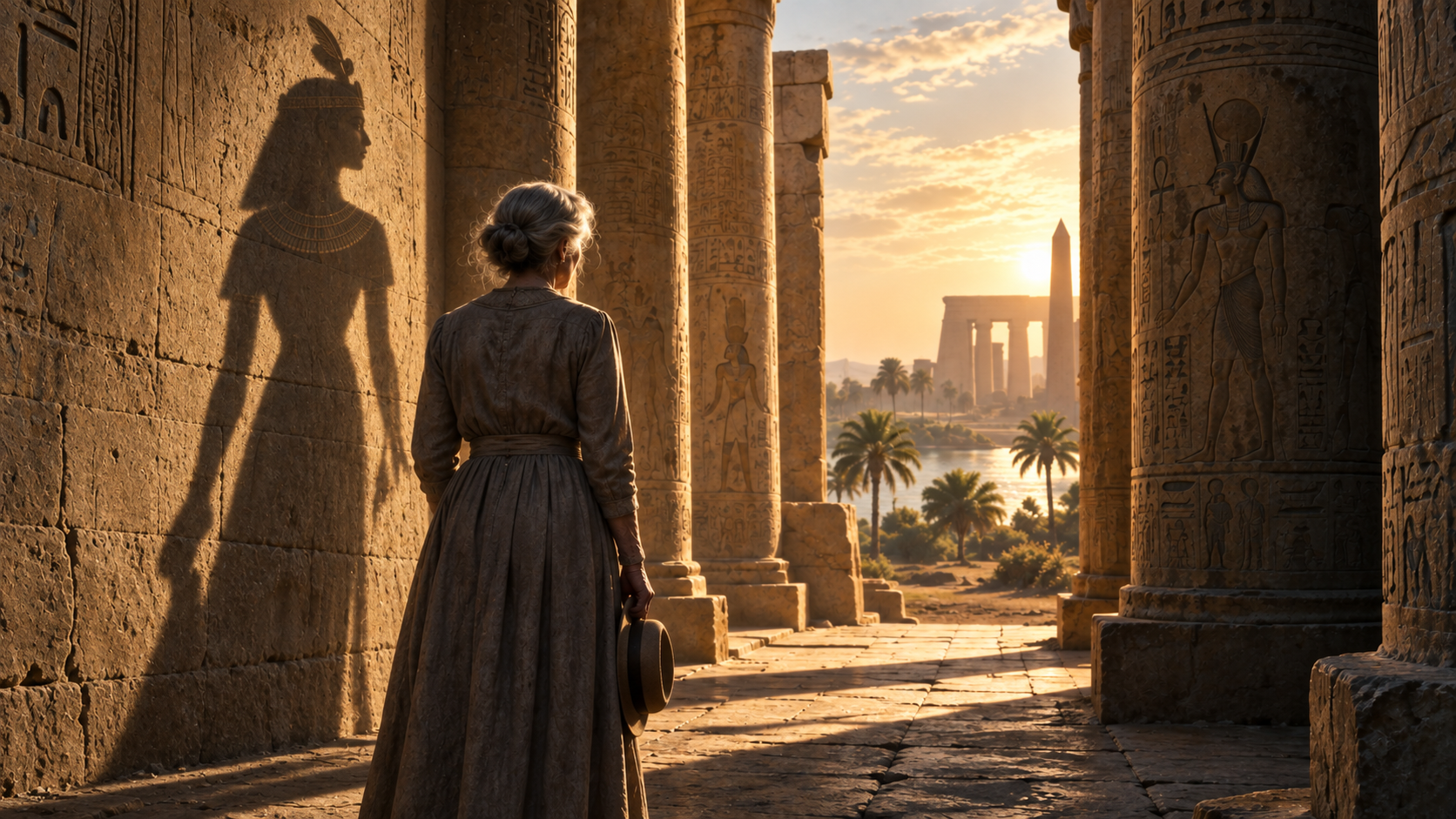
Imagine waking up one day with memories that aren’t your own - memories of a life lived thousands of years before you were even born. Strange visions begin to surface, whispers of a powerful ruler, a forbidden love, and a life filled with tragedy. These visions are as detailed as any childhood memory, attracting you toward a place you’ve never been but somehow know deeply.
What if these weren’t just dreams? What if they were fragments of a life long past?
Though you’ve never set foot there, the sights, smells, and sounds of that place world feel unmistakably real. The people around you dismiss these feelings as mere fantasy, but something inside tells you they are far more than that.
Now, imagine I told you these memories belong to someone from our own time. A woman whose life changed forever after a childhood accident, leading her to believe she had lived before - 3,000 years ago, as a priestess in ancient Egypt.
This is the story of Dorothy Eady
In this blog, we’ll cover:
Early Life
At the age of three, Dorothy Eady experienced an event that would change the course of her life. One day, while playing at her family’s home in Blackheath, she fell down a flight of stairs. The sound was loud and echoed through the house. Her parents rushed to her and found her lying unresponsive at the bottom of the stairs.
Panicked, her parents called a doctor. After a brief examination, the doctor declared that Dorothy had stopped breathing. There were no signs of life, and the worst was feared. Dorothy’s parents, overwhelmed with grief, believed they had lost their daughter. Minutes passed, turning into an hour, and the sense of loss grew heavier.
The doctor, having done all he could, offered his condolences to the family. The house fell silent, as they mourned the sudden and tragic loss of their child. But what followed was something beyond explanation.
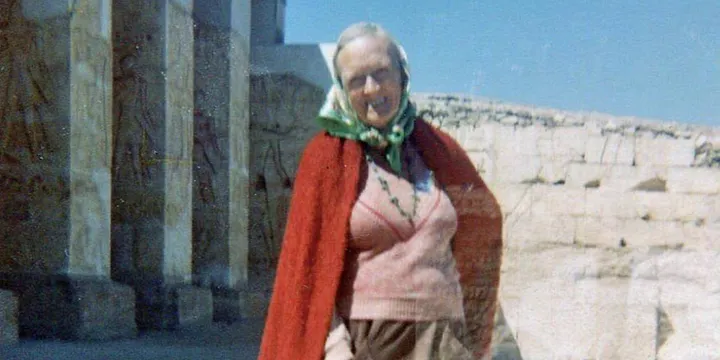
Mysterious Recovery
Nearly an hour after being declared dead, Dorothy suddenly regained consciousness. She sat up as if nothing had happened. The doctor and her parents were shocked. There was no gradual recovery, no sign of struggle - just a sudden return to full awareness. Apart from a minor injury to her head, Dorothy appeared completely unharmed.
This unexplainable recovery left the doctor and her family confused, with no medical explanation for what had occurred. The relief was immense, but this event marked the beginning of a series of changes in Dorothy’s behavior that no one could have anticipated.
Personality Change
After the accident, it became clear that Dorothy Eady had not only survived but also undergone a profound change. Her behavior shifted in ways that left her family both confused and concerned.
Changes in Behavior Post-Accident
In the weeks following the fall, Dorothy began to display behavior that was unusual for a child her age. She became withdrawn at times and seemed preoccupied with thoughts that were difficult to express. What was most unsettling, however, was her growing sense of displacement. She repeatedly told her parents that she “wanted to go home,” but it wasn’t their house in London that she was referring to. Despite being in her own home, she insisted that her true home was elsewhere, though she couldn’t explain where.
Development of Strange Memories
It wasn’t long before Dorothy began describing scenes and images that were completely unfamiliar to her family. She spoke of large buildings, gardens, and strange customs - things that a child raised in early 20th-century London could not possibly have encountered. These memories were vivid and detailed, as though she had lived them herself. The more she spoke, the clearer it became that these were not just the imaginings of a child. She would often wake up from vivid dreams, crying, and insisting that she needed to return to this mysterious place that felt like home.
Reactions of Family and Friends
Dorothy’s parents, understandably concerned, were at a loss. They did not know how to address her sudden changes in behavior and the strange things she was saying. At first, they tried to reassure her, telling her that she was home and that everything was fine. But Dorothy remained unconvinced, and her insistence on a life and home far away only grew stronger. Friends and extended family began to notice these changes as well, finding it difficult to understand what had caused such a dramatic shift in her personality. The once lively and cheerful child now seemed haunted by memories and emotions that did not fit with her young age or the life she had led up until that point.
The Beginning of Past-Life Memories
As Dorothy Eady grew older, the changes in her behavior following the accident became even more pronounced. She began to experience vivid and recurring dreams that seemed far too detailed to be the imaginings of a young child.
Vivid Dreams of Egypt
Dorothy’s dreams transported her to an ancient world she had never known in her waking life. These weren’t ordinary childhood dreams - they were filled with images of vast temples, towering pillars, and lush gardens. She described grand buildings, unfamiliar landscapes, and ceremonies that felt all too real. It became increasingly clear that she was recalling something much deeper than a mere fantasy. These memories weren’t from a past life just 200 or 300 years ago; they were from 3,000 years in the past. In her dreams, she saw herself walking through expansive courtyards and standing in the shadow of massive stone structures, which she later described as ancient Egyptian temples.
Descriptions of Ancient Buildings and Gardens
In these dreams, Dorothy often spoke of gardens filled with exotic plants and towering trees - places she had never visited in reality. She described buildings that were unlike anything found in modern England, speaking of their stonework, carvings, and intricate designs with a clarity that left her family baffled. Dorothy’s ability to recall these details seemed beyond the reach of a child who had no exposure to such places or knowledge of architecture from ancient times. She described hallways and chambers as though she had walked through them herself, and even mentioned the presence of specific rituals she had witnessed within these spaces.
Recurring Dreams of Temples and Rituals
One of the most striking aspects of Dorothy’s dreams was their consistency. Night after night, she was transported back to the same temples and scenes, with the same rituals being performed before her eyes. She would describe these rituals in great detail, from the offerings being made to the gods to the way the priests conducted themselves. Each dream seemed to build upon the last, creating a vivid tapestry of a life lived in ancient Egypt.
These dreams were so frequent and detailed that they began to dominate Dorothy’s thoughts during her waking hours. She felt a strong emotional connection to the places and events in her dreams, and this connection only grew stronger with time. The people around her struggled to understand how a young girl could know so much about a world that had been buried beneath centuries of history, but for Dorothy, these visions felt as real as any memory from her own childhood.
Recognition at the British Museum
As Dorothy Eady’s strange dreams and recollections continued to unfold, her connection to ancient Egypt took a significant turn during a visit to the British Museum.
Emotional Reaction to Egyptian Artifacts
During a family outing to the British Museum, Dorothy’s parents took her to see the Egyptian collection. As soon as they entered the Egyptian exhibit, something extraordinary happened. Dorothy, who had never visited the museum before, reacted with overwhelming emotion upon seeing the statues and artifacts. She ran toward the displays, kissing the feet of the statues and calling them “her people.” Her reaction wasn’t one of curiosity; it was as if she was reconnecting with something deeply familiar, almost as though the artifacts belonged to her past.
Her parents, confused and unsure of how to respond, tried to calm her down, but Dorothy seemed overcome by emotions she could not explain. To her, the statues and relics weren’t just historical objects; they felt like pieces of a life she had once lived. This moment marked a significant turning point for Dorothy, intensifying her belief that her dreams and memories were real, and that she had lived in ancient Egypt.
At one point, Dorothy even scolded other visitors for entering the exhibit with their shoes on, insisting that they remove them in respect for the statues. She believed that the statues deserved respect and that walking in with shoes was a sign of disrespect. Her behavior stunned both her parents and museum staff, leaving them unsure of how to explain her strong emotional connection to these ancient objects.
Identification of Artifacts from Her “Past Life”
What stood out even more was Dorothy’s ability to recognize specific artifacts without having any prior knowledge of Egyptology. She would identify objects with confidence, insisting that she remembered them from her previous life. At one point, she approached a statue and stated, with certainty, that she knew the individual it represented. Her parents, and even the museum staff, were taken aback by the accuracy of her statements, though they had no explanation for how a young child could know such details.
Her emotional connection to these objects, combined with her detailed knowledge, left her parents both concerned and bewildered. This experience at the British Museum only strengthened Dorothy’s conviction that her detailed dreams and memories weren’t mere fantasies but pieces of a past life lived centuries ago.
Disconnection from Christianity
As Dorothy’s connection to ancient Egypt grew stronger, it caused a noticeable rift between her and her Christian upbringing.
Expulsion from Sunday School
Dorothy’s behavior in Sunday school became increasingly disruptive as she began questioning the teachings of Christianity. At one point, she refused to participate in a hymn that included the line “Curse the swart Egyptians.” which referred to ancient Egyptians in a derogatory manner. Her refusal was more than just bold disobedience; it reflected her growing connection to Egypt and her rejection of anything that portrayed it negatively.
Refusal to Sing Hymns About Egypt
Dorothy’s resistance to anything critical of Egypt became a recurring theme. She rejected Christian hymns that portrayed Egyptians negatively, insisting that such songs were offensive. Her growing frustration with these teachings made it difficult for her to remain in a religious environment that she felt contradicted her personal beliefs and experiences.
Growing Fascination with Ancient Egypt
As her disconnection from Christianity deepened, Dorothy’s fascination with ancient Egypt intensified. She spent hours studying books and images of Egypt, trying to understand the memories and emotions that seemed to overwhelm her. The more she learned, the more she believed that her dreams were real, and that she was truly connected to a past life in Egypt. This growing obsession marked a critical shift in her identity, setting the stage for the life-changing journey she would eventually undertake.
Turning Point: The Claim of Reincarnation
Dorothy’s strange memories and vivid dreams eventually culminated in a life-altering realization. She began to recall a specific identity from her past life, which she believed explained her deep connection to ancient Egypt.
The Reawakening of Bentreshyt
As Dorothy delved deeper into her visions, she became convinced that she had lived before - 3,000 years ago in ancient Egypt. Through her dreams and recollections, Dorothy discovered her past identity as Bentreshyt, a young girl who served as a priestess at the Temple of Seti I in Abydos. These revelations would form the core of her belief that she was the reincarnation of this long-lost figure from Egypt’s history.
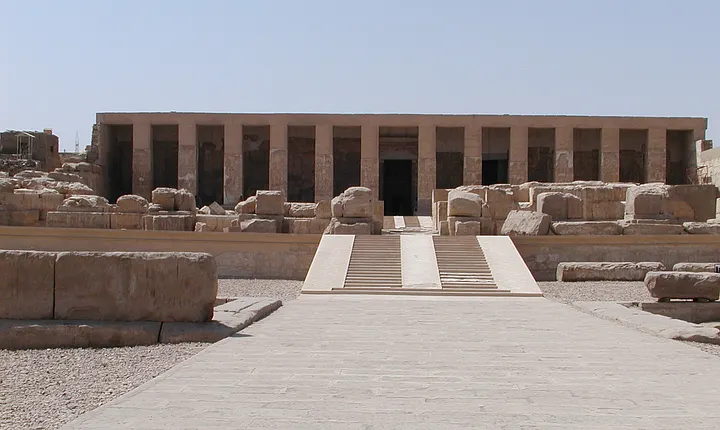
Discovery of Her Past Identity as Bentreshyt
Bentreshyt, according to Dorothy, was an orphaned girl who had been brought to the temple at a young age. Her role as a temple priestess involved carrying out sacred duties and participating in rituals. Dorothy’s memories of this life came to her gradually but with remarkable clarity. She recalled scenes of her time at the temple, the people she interacted with, and the rituals she took part in. These memories became the foundation of her belief that she had once lived as this Egyptian priestess.
The Name “Bentreshyt” Meaning “Harp of Joy”
Dorothy revealed that her past self had been given the name Bentreshyt, which translates to “Harp of Joy.” The name itself suggested a position of reverence within the temple and connected her directly to the spiritual practices of ancient Egypt. This personal discovery only deepened her belief that she had been a key figure in the temple during her former life.
Early Recollections of Her Time as a Priestess
Dorothy’s early recollections of her life as Bentreshyt included vivid scenes of temple life, religious ceremonies, and her duties as a priestess. She recalled standing in the sacred halls of the Temple of Seti I, assisting in the preparation of offerings and participating in religious rites dedicated to the gods. These memories, coupled with her knowledge of ancient Egypt, were far too detailed for someone without formal training, leading her to the conviction that these were not dreams but genuine memories of her past.
Her Relationship with Pharaoh Seti I
As Dorothy Eady’s memories of her past life as Bentreshyt unfolded, one of the most significant and deeply emotional aspects she recalled was her connection to Pharaoh Seti I. This relationship became central to her belief in her reincarnation and shaped much of her later life.
Dreams and Memories of Seti I
Dorothy’s dreams often featured Pharaoh Seti I, the ruler of Egypt during the 19th Dynasty (The Nineteenth Dynasty of Egypt (notated Dynasty XIX), also known as the Ramessid dynasty, is classified as the second Dynasty of the Ancient Egyptian New Kingdom period, lasting from 1292 BC to 1189 BC). In her recollections, she saw him not as a distant historical figure, but as someone with whom she had shared a personal and intimate connection. Dorothy claimed that in her past life as Bentreshyt, she had known Seti I closely. These memories were clear, often replaying scenes of their encounters, both within the temple and beyond.
The depth of emotion that accompanied these memories went beyond what might be expected from someone who had simply studied Egyptian history. Dorothy spoke of Seti I with great reverence and affection, convinced that their bond was one of the central experiences of her past life.
Forbidden Love with Seti I
According to Dorothy’s memories, her relationship with Pharaoh Seti I was not just that of a subject and ruler but a deeply personal and romantic connection. In her past life as Bentreshyt, Dorothy recalled being an orphaned girl who was brought to the Temple of Seti I to serve as a priestess. As part of her role, Bentreshyt took a vow of celibacy, a sacred commitment that forbade any form of romantic or sexual relationship. However, despite these vows, Bentreshyt and Seti I developed a passionate and forbidden love affair.
Dorothy’s recollections indicated that this relationship was not without serious consequences. Bentreshyt eventually became pregnant by Seti I, a situation that could not be ignored or hidden for long. The discovery of their affair and her pregnancy put them both at great risk. The laws of the temple were strict, and breaking her vows as a priestess carried severe penalties, including death.
Faced with the shame and the inevitable consequences of her actions, Bentreshyt took matters into her own hands. To avoid bringing dishonor to Pharaoh Seti I and to escape the punishment she believed was certain, Bentreshyt made the heartbreaking decision to take her own life. This tragic end to their forbidden love became one of the most significant memories Dorothy carried from her past life, influencing the dreams and visions that shaped her belief in reincarnation.
Returning to Egypt: A Marriage that Changed Everything
In 1933, Dorothy Eady’s personal life took a strong turn when she married Eman Abdel Meguid, an Egyptian man working in London. This marriage would allow her to finally move to Egypt, a place she believed to be her true home based on her past-life memories. Her arrival in Egypt marked the beginning of a new chapter, not only in her personal life but also in her journey as a self-taught Egyptologist.
Move to Egypt
After her marriage, Dorothy moved with her husband to Cairo, Egypt. Upon setting foot on Egyptian soil, she famously fell to her knees, kissed the ground, and declared she had finally returned home. Egypt, the land of her dreams and visions, was no longer just an ancient memory; it had become her reality.
Cultural and Marital Challenges
Though Dorothy had longed to return to Egypt, adjusting to life there was not without its difficulties. The cultural differences between her British upbringing and Egyptian society created challenges in her marriage. Dorothy, with her strong beliefs in her past life and Egypt’s ancient culture, often clashed with her husband and his more modern views. Their relationship became strained, and these tensions ultimately led to their divorce after a few years.
Birth of Her Son, Sety
During their marriage, Dorothy gave birth to a son, whom she named Sety, after Pharaoh Seti I, the ruler she believed she had loved in her past life. This choice of name reflected not only her connection to her past life but also her deep dedication to Egypt’s ancient history. After her divorce, Dorothy took on the title Omm Sety, meaning “Mother of Sety.” This title was a traditional Arabic honorific, used to refer to women as the mother of their eldest son. For Dorothy, however, the name carried deeper meaning. She claimed that in her past life as Bentreshyt, her bond with Pharaoh Seti I was so strong that in this life, the name “Omm Sety” symbolized her connection to both her son and the pharaoh from her past.
First Woman in Egypt’s Antiquities Department
After her divorce and having established herself as Omm Sety, Dorothy Eady became the first woman to work in Egypt’s Department of Antiquities. Her deep knowledge of Egyptology, despite having no formal academic training, earned her a position that allowed her to contribute significantly to Egypt’s most important archaeological projects.
Working with Selim Hassan on Major Excavations
One of Dorothy Eady’s most significant early roles in Egyptology was working with the renowned archaeologist Selim Hassan, a key figure in Egyptian archaeology at the time. In 1935, after her separation from her husband, Dorothy moved to Nazlat al-Samman, near the Giza pyramids, where she met Hassan. He employed her as his secretary and draughtswoman, making her the first woman to work for Egypt’s Antiquities Department.
During her time with Hassan, Dorothy played an integral role in several of his major excavations around Giza. Her responsibilities extended beyond the typical administrative tasks. Dorothy was responsible for cataloging important findings, recording inscriptions, and assisting with site interpretations. Her meticulous attention to detail in documenting discoveries contributed significantly to the accuracy of the excavation records.
What made her contributions even more remarkable was her ability to intuitively identify locations and details on the site that others often overlooked. Her knowledge of ancient Egypt, combined with what some described as an uncanny instinct, allowed her to provide insights that were invaluable to the fieldwork.
Dorothy also worked closely with Hassan on editing, proofreading, and drawing for his monumental ten-volume work, “Excavations at Giza.” Her contributions were so critical that Hassan gave her special mention in his publications, expressing sincere gratitude for her efforts in drawing, editing, and indexing the findings. Her expertise in hieroglyphs and archaeological techniques was highly valued by Hassan and others she worked with during this period.
In addition to her excavation work, Dorothy’s association with Egyptologists like Hassan helped her further develop her skills in drawing, translating hieroglyphics, and understanding the complexities of ancient Egyptian rituals. Her work at Giza remains one of the most noted periods in her long and unusual career as an Egyptologist, recognized by the wider academic community.
Editing and Proofreading Egyptological Publications
In addition to her work on-site during excavations, Dorothy Eady became an invaluable asset behind the scenes by contributing her skills in editing and proofreading Egyptological publications. With her extensive knowledge of hieroglyphics and firsthand experience in fieldwork, Dorothy brought an unparalleled level of accuracy and insight to the scholarly process. Scholars and researchers relied on her to ensure that translations and interpretations of ancient texts were precise. She was known for her meticulous attention to detail, especially when handling complex inscriptions or religious texts, which were central to understanding the rituals and culture of ancient Egypt.
Her contributions extended to major archaeological reports and publications, particularly those relating to the “Excavations at Giza,” where she played a key role in cataloging findings. Her ability to connect the written word with physical discoveries in the field enhanced the overall quality of the work, allowing archaeologists to present their findings with clarity and reliability. Dorothy’s editorial work became highly respected, and her deep understanding of the culture allowed her to offer corrections or insights that even seasoned Egyptologists might have overlooked.
Her Role in Giza and Dahshur Projects
While Dorothy’s early work focused on Giza, her contributions expanded to other important archaeological sites in Egypt, including Dahshur, home to some of the most iconic pyramids in the country. At Dahshur, Dorothy was involved in significant excavations, working alongside teams of researchers and excavators. Her role involved not only documenting the finds but also offering valuable insights into the historical and cultural context of the discoveries.
At Dahshur, Dorothy’s experience and knowledge helped guide excavations toward uncovering essential elements of Egypt’s pyramid complexes. Her work in both Giza and Dahshur solidified her reputation as an expert in interpreting the architectural and ritualistic significance of these ancient structures. Her consistent presence and hands-on involvement in these projects made her a key figure in documenting and understanding Egypt’s pyramid sites beyond just Giza. Her work in Dahshur was especially important in contributing to the broader understanding of the Middle Kingdom’s pyramid-building practices.
Working with Ahmed Fakhry
Later in her career, Dorothy worked closely with Ahmed Fakhry, a prominent Egyptologist known for his research on Egypt’s pyramids. Fakhry’s work focused on many of the lesser-known pyramids, and Dorothy’s expertise in hieroglyphic translation and her familiarity with ancient Egyptian customs made her an essential collaborator. Together, they explored areas such as Dahshur and the Western Desert, where Fakhry was investigating the lesser-studied aspects of ancient Egyptian pyramid complexes.
Dorothy’s role in Fakhry’s projects went beyond just translation. She was often tasked with interpreting newly uncovered inscriptions and making sense of the architectural layouts they discovered. Her knowledge of temple rituals and religious practices was frequently called upon when they encountered objects or locations associated with worship. Fakhry respected Dorothy’s deep understanding of ancient Egypt and her ability to interpret artifacts in their historical and cultural contexts. Over time, she became an indispensable part of his team, offering her expertise and experience to help shape the direction of their research.
Continued Work with Prominent Egyptologists
As Dorothy Eady, now known as Omm Sety, gained respect in the Egyptological community, her work expanded, allowing her to collaborate with some of the most notable figures in the field. Despite her unconventional background and lack of formal academic training, she became a trusted colleague to many leading Egyptologists of her time.
Contributions to the “Excavations at Giza” Publication
One of Dorothy’s most significant contributions was to the documentation and publication of the “Excavations at Giza.” Her work alongside Selim Hassan was instrumental in recording important finds at the Giza Plateau. As part of her role, Dorothy meticulously cataloged and transcribed hieroglyphic inscriptions and assisted in interpreting discoveries related to the tombs and monuments surrounding the Great Pyramid. Her attention to detail and deep understanding of the ancient texts played a crucial role in ensuring the accuracy of these publications, which remain vital to Egyptology today.
Reputation in the Archaeological Community
Over time, Dorothy earned a strong reputation within the archaeological community, despite initial skepticism about her background and claims of reincarnation. Her intimate knowledge of ancient Egypt, combined with her unwavering dedication, won the respect of Egyptologists who valued her contributions to their research. Her insights into temple rituals, hieroglyphics, and ancient customs were considered not only impressive but indispensable. As a result, Dorothy became a well-known figure within Egypt’s Department of Antiquities and the broader scholarly world.
Developing a Strong Network of Egyptologists
Through her work, Dorothy developed a network of close relationships with some of the most prominent Egyptologists of the time. Her collaboration with experts like Selim Hassan, Ahmed Fakhry, and other influential scholars helped solidify her place within the Egyptological community. Dorothy’s genuine passion for uncovering the mysteries of ancient Egypt, combined with her vast knowledge and experience, allowed her to build strong connections with colleagues who came to respect and rely on her expertise.
Relocating to Abydos (1956)
In 1956, Dorothy Eady, now known as Omm Sety, made the momentous decision to relocate to Abydos, an ancient city in Upper Egypt where the Temple of Seti I was located. This move was a pivotal moment in her life, as it marked her final connection to the place she believed she had lived in her past life as a priestess. Despite being offered a well-paid job in Cairo by the Antiquities Department, Dorothy chose to move to Abydos. Her decision was not based on financial considerations but rather on her deep emotional and spiritual connection to the site.
According to Omm Sety, she had received “approval” from Seti I himself through her dreams, encouraging her to settle in Abydos. She believed that Seti I, her lover in her past life as Bentreshyt, still watched over her and guided her decisions. Moving to Abydos allowed her to fully immerse herself in the study and preservation of the temple, fulfilling what she saw as a sacred duty.
This relocation to Abydos was also significant in Dorothy’s career as an Egyptologist. It allowed her to work directly at the Temple of Seti I, where she contributed valuable insights into its restoration and preservation. Despite the financial and personal challenges of leaving Cairo, where professional opportunities were more lucrative, Dorothy’s spiritual connection to Abydos made it the clear choice for her.
Life in Abydos
Life in Abydos was a sharp contrast to the modern conveniences Dorothy had experienced in Cairo. The village where she lived was simple, with minimal amenities, and the local lifestyle was humble. Dorothy, now fully embracing her identity as Omm Sety, lived in a small house near the temple. Her lifestyle reflected the humility and devotion she felt toward the ancient gods and the past life she believed she had lived.
Despite the modest conditions, Omm Sety thrived in Abydos. The local people held her in high regard, not only for her deep knowledge of the temple and ancient Egyptian history but also for her honesty and humility. She became a well-respected figure in the community, and her spiritual practices, including daily rituals and offerings to the ancient gods, became a part of her routine. These rituals, often conducted at the Temple of Seti I, further solidified her identity as a reincarnated priestess.
Omm Sety’s deep connection to the past and her simple way of life allowed her to gain the respect of both the local villagers and the Egyptological community. Her knowledge of ancient Egyptian customs, combined with her personal devotion, made her a trusted figure in Abydos, where she spent the remaining years of her life.
Omm Sety and the Temple of Seti I
Omm Sety’s relationship with the Temple of Seti I was profound. She believed that in her past life as Bentreshyt, she had served as a priestess at this very temple, which deepened her connection to the site. Her knowledge of the temple’s layout, rituals, and history was unparalleled, leading archaeologists to seek her insights when conducting excavations or restorations. Omm Sety was involved in various restoration projects at the temple, using her knowledge to guide the preservation efforts of this ancient structure.
Her connection to the temple wasn’t just academic; it was deeply personal. Omm Sety regularly performed rituals and offerings to the gods in the temple, believing that she was continuing the spiritual practices of her past life. These rituals were a vital part of her daily routine, reinforcing her bond with the ancient past.
Omm Sety also served as a guide for both archaeologists and tourists who visited Abydos. Her detailed understanding of the temple’s history, combined with her personal stories of Seti I, made her an invaluable resource for scholars and an unforgettable figure for visitors. Through her work and personal devotion, Omm Sety ensured that the Temple of Seti I remained both preserved and respected as a sacred space.
Unexplained Phenomena and Contributions
Throughout her life, Dorothy Eady, or Omm Sety, exhibited what many considered to be extraordinary, if not supernatural, knowledge of ancient Egypt. One of the most baffling aspects of her abilities was her deep understanding of hieroglyphics, which she mastered without formal academic training. These abilities were often attributed to her belief that she had lived a previous life in ancient Egypt, serving as a priestess in the Temple of Seti I.
Unnatural Knowledge of Hieroglyphics
One of the most remarkable aspects of Dorothy’s Egyptological work was her rapid and seemingly intuitive mastery of ancient Egyptian hieroglyphics. Despite not having received formal education in this complex writing system, Dorothy quickly gained fluency in reading and interpreting hieroglyphics, a skill that typically takes years of dedicated academic study. Her grasp of the language was so advanced that even seasoned Egyptologists sought her expertise when it came to translating inscriptions and texts.
Rapid Mastery of Ancient Egyptian Hieroglyphics
Dorothy’s ability to learn hieroglyphics stunned her colleagues. Without attending formal training or university, she was able to read and translate ancient texts with an accuracy that rivaled that of trained professionals. She credited this rapid mastery to memories from her past life, where she believed she had used these writing systems on a daily basis as a priestess. This ability allowed her to contribute extensively to Egyptological research, particularly in her work with Selim Hassan and others.
Her proficiency in the language led to her assisting with translations of ancient inscriptions at major sites such as Giza and Abydos. Dorothy’s colleagues were often amazed by how quickly she could interpret complex hieroglyphic texts, a task that is typically time-consuming and requires in-depth study.
Memories of Ancient Writing Systems
Dorothy’s knowledge of ancient Egyptian writing systems extended beyond the formal hieroglyphic script. She also claimed to have memories of lesser-known and symbolic forms of writing used by priests and in religious contexts. These memories allowed her to interpret obscure symbols and inscriptions that baffled even experienced Egyptologists.
According to Dorothy, these memories were not learned through study but were recollections from her past life, where she had been trained in the use of these systems as part of her role as a priestess. She often described the writing systems as second nature, providing further evidence to those who believed in her reincarnation claims.
Ability to Translate Without Formal Training
Perhaps the most astonishing aspect of Dorothy’s work with hieroglyphics was her ability to translate ancient texts without any formal training. Unlike her colleagues, who had spent years in academic study, Dorothy seemed to instinctively know the meanings behind the symbols and their cultural contexts. This ability often puzzled those around her, as it defied conventional understanding of how such complex knowledge is acquired.
Her work on translating the inscriptions at Abydos and Giza was particularly significant, as she offered detailed explanations of religious texts, temple rituals, and historical events with remarkable accuracy. Many of her translations were later verified by trained Egyptologists, further solidifying her reputation as an expert in ancient Egyptian writing, despite her unconventional background.
Archaeological Discoveries “From Memory”
One of the most remarkable aspects of Dorothy Eady’s life as Omm Sety was her ability to recall specific details of the Temple of Seti I in Abydos and other ancient sites, based purely on what she claimed were memories from her past life as a priestess. These memories helped her make significant archaeological contributions that surprised even seasoned experts. Omm Sety’s intimate knowledge of Abydos, in particular, led to several discoveries that would have been difficult to make without her unusual insights.
Discovery of the Temple Garden at Abydos
One of the most striking discoveries attributed to Omm Sety’s memories was the location of a long-buried temple garden at Abydos. Dorothy claimed to remember the existence of a lush garden located within the temple grounds, a place she insisted had been a key feature during her time as a priestess. At first, there was skepticism among the archaeologists, as no records or previous excavations had ever suggested the presence of such a garden.
However, following her guidance, excavations were carried out in the exact area she had indicated, and to everyone’s astonishment, evidence of a garden was indeed found. The discovery of the temple garden, complete with traces of ancient plants and structures for irrigation, confirmed her claims and led some archaeologists to believe that her memories were based on more than just a fascination with ancient Egypt. This find became one of the most famous examples of her ability to recall detailed aspects of the temple that had not been previously documented.
Identifying Hidden Tunnels in the Temple
Another significant contribution made by Omm Sety was her ability to identify hidden architectural features within the Temple of Seti I. According to Dorothy, she remembered that there were secret passages and tunnels located beneath the temple, used during religious ceremonies in ancient times. These tunnels had been forgotten over the centuries, and no historical records indicated their existence.
Relying on her memories, she pointed out specific areas within the temple where these hidden tunnels could be found. Following her directions, archaeologists uncovered previously unknown tunnels beneath the temple structure, validating yet another of her claims. These passages were believed to have been used by priests and other temple officials for ceremonial purposes, further deepening the mystery around Dorothy’s seemingly innate knowledge of the temple layout.
Leading Archaeologists to Specific Locations
Omm Sety’s contributions didn’t stop at the discovery of gardens or hidden tunnels. She consistently provided archaeologists with remarkably accurate information about where to excavate for particular relics or structures. Often, she would walk through the temple or other ancient sites and point out specific locations, stating with certainty that artifacts or important findings would be found in those areas. Many times, her predictions were confirmed when excavations revealed exactly what she had described.
For instance, she was able to guide researchers to specific spots where temple inscriptions had been damaged or lost over time, allowing for the reconstruction of parts of the temple’s history that had been unclear. Her ability to lead experts to previously unknown or forgotten parts of the temple complex made her an invaluable asset to the team working at Abydos. Her knowledge of the site was so accurate that, despite skepticism, many archaeologists came to rely on her input when planning their excavations.
Tests of Her Knowledge
Despite Dorothy Eady’s unconventional claims and her belief in reincarnation, she was not only respected for her insights but also put to several rigorous tests to verify the authenticity of her knowledge. Over time, these tests proved that her deep understanding of ancient Egyptian sites, particularly the Temple of Seti I, was more than mere coincidence. She exhibited an uncanny familiarity with details that could only have been known by someone with firsthand experience - according to her, from a past life.
The Test in Complete Darkness
One of the most famous and convincing tests of Omm Sety’s knowledge took place at the Temple of Seti I. The chief inspector of the Egyptian Antiquities Department, who was skeptical of her claims, decided to put her knowledge to the test in a manner that could leave no room for chance. One night, he led her into a section of the temple that had not yet been fully studied or explored, and the entire examination was conducted in complete darkness with only a single torch for light.
During this test, Omm Sety was asked to identify the wall paintings and features of the temple based purely on memory. Without any visual cues to guide her, Dorothy accurately described the exact positions of various wall carvings, paintings, and inscriptions, including those that had yet to be fully uncovered or documented by archaeologists. Her ability to recall these features in such detail, especially in darkness, left many stunned and further deepened the mystery around her knowledge of the temple.
This test became a pivotal moment in her career, convincing several archaeologists who had initially been skeptical of her claims. It also marked one of the clearest demonstrations of the detailed knowledge she possessed about the temple where she believed she had served as a priestess in her past life.
Perfectly Identifying Wall Paintings and Features
Another striking example of Omm Sety’s knowledge occurred during her involvement in the restoration and study of the Temple of Seti I. She consistently demonstrated an ability to perfectly identify and describe specific wall paintings and architectural features long before they were uncovered. For example, she guided archaeologists to specific locations where previously undocumented inscriptions or paintings were hidden under layers of sand and debris.
Dorothy was able to describe these features in great detail, including the subjects of the paintings and the inscriptions they contained. When these areas were finally excavated and uncovered, her descriptions were found to be accurate. This ability to identify such features with precision, even before excavations began, gave further credence to her belief that she had intimate, firsthand knowledge of the temple from a past life.
Her predictions and insights were often verified by professional archaeologists, who, despite their initial doubts, came to rely on her input when working within the temple complex. These instances reinforced her standing within the Egyptological community and provided compelling evidence to support her claims of reincarnation.
Other Instances Where Her Knowledge Was Verified
In addition to the tests conducted at the Temple of Seti I, there were several other instances throughout Dorothy Eady’s life where her knowledge of ancient Egypt was put to the test - and consistently verified. For example, she once directed archaeologists to a specific area within the temple grounds, claiming that they would find a particular tunnel or chamber based on her memories. Upon following her directions, the team discovered the hidden structure exactly where she had indicated, further validating her claims.
Her insights weren’t limited to Abydos alone. Omm Sety was known to offer detailed information about other ancient Egyptian sites, particularly Giza, where her knowledge of specific architectural and religious practices allowed for more accurate reconstructions of Egypt’s ancient past. On many occasions, when archaeologists encountered puzzling inscriptions or unclear layouts, they turned to Omm Sety, who would often provide explanations that later proved correct.
Her knowledge extended beyond just architectural features; it included details of religious rituals, historical figures, and everyday life in ancient Egypt - many of which had not yet been uncovered by modern research at the time she revealed them. Over the years, these numerous examples solidified her reputation as a knowledgeable and trusted figure, not just among believers in reincarnation but within the wider Egyptological community.
These tests of Omm Sety’s knowledge, both formal and informal, helped build her legacy as a figure who defied conventional explanations. Her ability to recall details from ancient Egypt, with such precision and accuracy, remains one of the most compelling aspects of her extraordinary life.
Bridging Ancient Spirituality
Dorothy Eady, also known as Omm Sety, held some interesting views on Hinduism, particularly drawing parallels between Hinduism and ancient Egyptian religion. Although she primarily dedicated her life to studying and preserving the ancient Egyptian culture and its spiritual practices, she often commented on similarities she observed between the two religions, especially regarding reincarnation, ritualistic practices, and devotion to multiple deities.
Omm Sety believed that Hinduism and ancient Egyptian religion shared common spiritual roots, particularly in their views on the afterlife and the cycle of rebirth. She suggested that the Hindu belief in reincarnation was remarkably similar to the ancient Egyptian idea of life after death. This similarity deeply resonated with her own belief in reincarnation, stemming from her conviction that she had lived a previous life as Bentreshyt, a priestess in ancient Egypt.
Another parallel she noted was the importance of rituals and offerings in both religions. Omm Sety observed that, much like ancient Egyptians, Hindus perform daily rituals to honor their gods and ancestors. Both cultures placed a strong emphasis on the afterlife, the moral conduct of individuals, and the relationship between humans and their gods.
Though Dorothy Eady never practiced Hinduism, she appreciated its spiritual depth and often spoke about its universal aspects, such as the idea of karma and the importance of living a virtuous life. She believed that both religions, in their reverence for the divine and their ritual practices, provided profound spiritual guidance to their followers.
While she did not extensively write or publish on Hinduism, her reflections on it underscore her broader spiritual worldview, which embraced the mysteries of life, death, and the soul’s journey across time, bridging both the ancient Egyptian and Hindu perspectives.
Her Contributions and Works
Dorothy Eady, known as Omm Sety, made significant contributions to the field of Egyptology, particularly through her work at the Temple of Seti I in Abydos. Her deep knowledge of the site, combined with her extraordinary ability to recall specific details from her claimed past life, made her an invaluable resource for archaeologists working in the area. Although she had no formal academic training, Omm Sety’s work in cataloging, restoring, and understanding the temple’s inscriptions and architecture left a lasting impact on Egyptology.
Archaeological Work at Abydos
Omm Sety dedicated a significant portion of her career to preserving and studying the Temple of Seti I at Abydos, which she believed had been her home in a previous life. She contributed to various aspects of the temple’s archaeological work, helping to preserve its rich history and intricate details.
Cataloging and Indexing Inscriptions
One of Omm Sety’s most important contributions at Abydos was her work in cataloging and indexing the temple’s extensive inscriptions. The Temple of Seti I contains hundreds of hieroglyphic inscriptions, many of which were incomplete or damaged due to the passage of time. Omm Sety played a crucial role in meticulously recording and cataloging these inscriptions, ensuring that they were preserved for future study.
Her intimate understanding of hieroglyphics allowed her to transcribe the temple’s texts with remarkable accuracy, often identifying patterns and meanings that had previously been overlooked. This work was vital for the overall understanding of the temple’s religious significance, as the inscriptions contained prayers, rituals, and depictions of the pharaoh’s relationship with the gods. By cataloging these inscriptions, Omm Sety helped bridge the gap between ancient religious practices and modern-day Egyptology.
Identifying Fragments of Stone Blocks
Omm Sety’s keen eye for detail was particularly useful in the identification of fragmented stone blocks throughout the temple. Many of the temple’s structures and decorative elements had been damaged or displaced over centuries, leaving behind pieces of stone that no longer fit into their original context. Omm Sety had an uncanny ability to match these fragments with their corresponding structures, helping to reconstruct large portions of the temple’s design.
Her work in identifying and matching fragments of stone blocks was essential in reconstructing some of the temple’s most significant elements. She worked alongside archaeologists, advising on where specific blocks and pieces should be placed to restore the temple as accurately as possible. This painstaking process contributed to the overall restoration efforts at Abydos, helping to preserve one of Egypt’s most important ancient temples.
Contributing to the Reassembly of Temple Elements
In addition to identifying individual fragments, Omm Sety played an active role in the larger project of reassembling the Temple of Seti I. Her intimate knowledge of the temple’s layout, combined with her understanding of its historical and religious significance, made her an invaluable partner in the restoration efforts.
Dorothy often provided guidance to archaeologists working to restore damaged sections of the temple. Her ability to recall the temple’s original appearance, as well as her knowledge of ancient construction techniques, allowed her to offer insights that would otherwise have been lost to history. Through her contributions, several key elements of the temple were successfully reassembled, preserving both its physical structure and its cultural heritage.
Published Works and Research
Throughout her career, Dorothy Eady, also known as Omm Sety, produced several works that significantly contributed to the understanding of ancient Egyptian culture and history. While she did not receive formal academic training, her deep knowledge of hieroglyphics and Egyptian customs earned her respect among scholars and archaeologists. Her work spanned multiple areas, from co-authoring and editing to writing her own publications, most notably about the Temple of Seti I at Abydos.
Co-authoring and Editing Research Papers
Dorothy’s early work with Egyptologists like Selim Hassan and Ahmed Fakhry gave her the opportunity to contribute to numerous publications. As a draughtswoman and secretary, she edited, proofread, and helped produce major works, such as Hassan’s ten-volume series on the “Excavations at Giza.” Her contributions were so critical to this series that she was given special mention for her editing, indexing, and drawing. She also worked on indexing hieroglyphic inscriptions and creating illustrations to accompany archaeological reports.
While not always formally credited as the primary author, Dorothy’s input was invaluable in polishing and ensuring the accuracy of academic Egyptological research. Her ability to translate hieroglyphics was key in making complex inscriptions accessible to other scholars.
Collaborations with Leading Egyptologists
Dorothy Eady’s collaborations were not limited to just editing. She worked closely with Ahmed Fakhry, particularly during his excavations at Dahshur, and with Selim Hassan in Giza. Both Fakhry and Hassan acknowledged her skills, especially in translating hieroglyphics and assisting with the documentation of archaeological findings. Fakhry, in particular, noted her help during the Dahshur excavations where her knowledge of ancient Egyptian culture and language proved invaluable to his research.
She was also frequently sought out by Egyptologists for her unique insights into ancient Egyptian rituals and daily life. Her deep understanding of the religious practices of ancient Egypt allowed her to make significant contributions to the interpretation of historical texts and structures.
Published Books on Abydos and Seti I’s Temple
Dorothy’s personal connection to the Temple of Seti I in Abydos, where she believed she had served as a priestess in her past life, culminated in several published works. One of her most notable books is “Abydos: Holy City of Ancient Egypt,” which she co-authored. This publication is considered one of the definitive works on the religious and cultural significance of Abydos in ancient Egyptian civilization.
In addition, she worked on “The Osiris Temple at Abydos,” contributing her insights and interpretations of the religious rituals that took place in the temple. Her unique perspective, blending spiritual belief with historical fact, made these works stand out in the field of Egyptology.
Skepticism and Critics
Throughout her life, Dorothy Eady (Omm Sety) attracted both intense curiosity and skepticism. Her extraordinary claims about reincarnation and her alleged past life as a priestess in ancient Egypt were met with varied reactions from the Egyptological community. While her contributions to archaeology were respected, her assertions of having lived a previous life 3,000 years ago raised doubts among more rational-minded scholars.
Rational Explanations for Her Knowledge
Many skeptics attempted to explain Omm Sety’s detailed knowledge of Egyptian temples and rituals as the result of her lifelong obsession with Egypt, rather than proof of reincarnation. Rational explanations suggest that Dorothy, having studied Egyptology extensively, could have acquired her vast knowledge through years of reading, observation, and her natural ability to absorb information. Some critics have pointed out that while her knowledge was impressive, it was not beyond what a determined researcher could learn over decades of immersion in the subject.
Accusations of Fabrication and Coincidence
There were also accusations that some of Omm Sety’s discoveries were coincidental, or that her “memories” were merely educated guesses. Critics argued that many of her predictions about the Temple of Seti I and other sites could be explained as coincidences or the result of logical deductions based on existing knowledge. Some contemporary scholars dismissed her claims as the product of a vivid imagination, bolstered by a deep personal need to believe in a mystical connection with ancient Egypt.
For instance, many were skeptical of her claim to have found the lost garden of the Temple of Seti I based purely on memory. While the discovery was indeed remarkable, some scholars suggested that it could have been the result of careful study and observation rather than past-life recollections.
Contemporary Scholars Who Dismissed Her Claims
Several contemporary Egyptologists dismissed Omm Sety’s claims outright. Among them, James Peter Allen, a renowned Egyptologist, expressed doubts about the supernatural aspects of her life. While he acknowledged her contributions to Egyptology, Allen and others like him maintained that her knowledge of ancient Egypt, while impressive, was not proof of reincarnation. They attributed her skills and discoveries to her intense passion for the subject rather than mystical insight.
Supporters and Believers
While there were many skeptics, Omm Sety also garnered significant support from prominent figures in the Egyptological world. Her detailed insights and the accuracy of some of her predictions led many to believe that there might be more to her story than mere coincidence or fabrication.
Egyptologists Who Valued Her Expertise
Despite the skepticism, many Egyptologists deeply respected Omm Sety’s work and insight. One of her most significant supporters was Salim Hassan, the Egyptologist with whom she worked during the Giza excavations. He recognized her contributions to the documentation and interpretation of the Giza Plateau and often praised her abilities.
Another Egyptologist who valued her expertise was Ahmed Fakhry, who worked with her on various projects and held her in high regard for her contributions to the Dahshur excavations. He appreciated her deep understanding of ancient Egyptian culture, particularly the religious aspects that she claimed to remember from her past life.
Kenneth Kitchen’s Silent Endorsement
While Kenneth Kitchen, a leading British Egyptologist, never openly endorsed Omm Sety’s reincarnation claims, he spoke highly of her abilities. In private, Kitchen reportedly acknowledged her impressive grasp of hieroglyphs and her deep knowledge of the Temple of Seti I. Though he refrained from making statements about her supernatural beliefs, his respect for her expertise in Egyptology suggested that he found her skills invaluable.
Nicholas Reeves and His Acknowledgment of Her Insights
Another prominent Egyptologist, Nicholas Reeves, also appreciated Omm Sety’s insights, particularly her knowledge of the Valley of the Kings. Reeves was involved in the search for the tomb of Queen Nefertiti and took into account some of Omm Sety’s claims about hidden chambers. Although her assertions about specific burial locations were not immediately verified, Reeves and others respected her intuitive understanding of ancient Egyptian sites.
Impact on Egyptology and Reincarnation Studies
Dorothy Eady’s legacy continues to spark debate, not only within Egyptology but also in the field of reincarnation studies. Her life and claims have become a focal point for those interested in the intersection of archaeology and the possibility of past lives.
The Debate Over Her Reincarnation Claims
The debate over Omm Sety’s reincarnation claims remains unresolved. While some scholars and spiritual seekers view her life as one of the most convincing modern cases of reincarnation, others remain skeptical, attributing her knowledge to her lifelong immersion in Egyptology. This divide continues to shape discussions about the nature of consciousness, memory, and the possibility of past lives.
Her story has inspired documentaries, books, and research into reincarnation, with some considering her case as a compelling example of unexplained phenomena. Scholars in the field of parapsychology and reincarnation studiescontinue to examine her life as part of broader investigations into human consciousness and past-life memories.
Her Influence on Spiritual Seekers and Researchers
Omm Sety’s story has had a lasting influence on both spiritual seekers and researchers interested in ancient Egypt. Her deep connection to the Temple of Seti I and her unwavering belief in her past life as a priestess have inspired countless individuals to explore the possibility of reincarnation. Many spiritual seekers consider her life a powerful testament to the mysteries of the human soul and its connection to ancient cultures.
Additionally, her contributions to Egyptology, regardless of her beliefs, have earned her a place in the annals of archaeological history. Her life’s work, from editing important texts to guiding excavations based on her “memories,” continues to be studied and discussed within both scholarly and spiritual circles.
Dorothy’s Final Years in Abydos
Dorothy Eady, or Omm Sety, spent the last years of her life in Abydos, fully embracing her role as a custodian of ancient Egyptian traditions. Her dedication to the Temple of Seti I remained unwavering, even as her health began to decline. Living in a modest home near the temple, she continued her lifelong commitment to the study and preservation of ancient Egypt.
Dedication to the Temple and Ancient Religion
Until her last days, Omm Sety maintained a deep spiritual connection to the Temple of Seti I. She believed her life’s purpose was to preserve the temple’s legacy and to continue practicing the religious rites that she claimed to remember from her past life as Bentreshyt, a priestess in ancient Egypt. Omm Sety performed daily rituals and offerings to the gods, often within the temple itself. Locals and archaeologists alike admired her devotion, seeing her as an embodiment of ancient Egyptian spirituality in the modern era.
Her role at the temple was not purely spiritual; she also provided valuable assistance to archaeologists working on restoration and excavation projects at Abydos. Her insights into the temple’s history, combined with her unmatched knowledge of its layout and significance, made her an invaluable resource. Even in her later years, when her health began to fail, she continued to contribute to archaeological research.
Continued Work Despite Failing Health
In her final years, Omm Sety’s health deteriorated, but her commitment to the temple and Egyptology never wavered. She continued to work alongside archaeologists, offering guidance based on her extensive knowledge of the temple and its surrounding areas. Though she struggled with physical ailments, her mind remained sharp, and she continued to assist researchers, even from her home when she could no longer visit the temple regularly. Her dedication to ancient Egypt and her work at Abydos persisted until her death in 1981.
Death and Burial in Abydos (1981)
Dorothy Eady passed away in 1981 at the age of 77. Her death marked the end of a life filled with mystery, devotion, and an unshakable belief in her connection to ancient Egypt.
Burial in the Coptic Cemetery Near Abydos
In accordance with her wishes, Omm Sety was buried in the Coptic Cemetery near Abydos, close to the temple she had dedicated her life to. Her burial in this sacred land symbolized her final return to what she considered her true home, the place she believed she had lived in during her previous life as Bentreshyt. Her grave remains a modest one, a testament to her simple lifestyle and her lifelong devotion to the temple and its history.
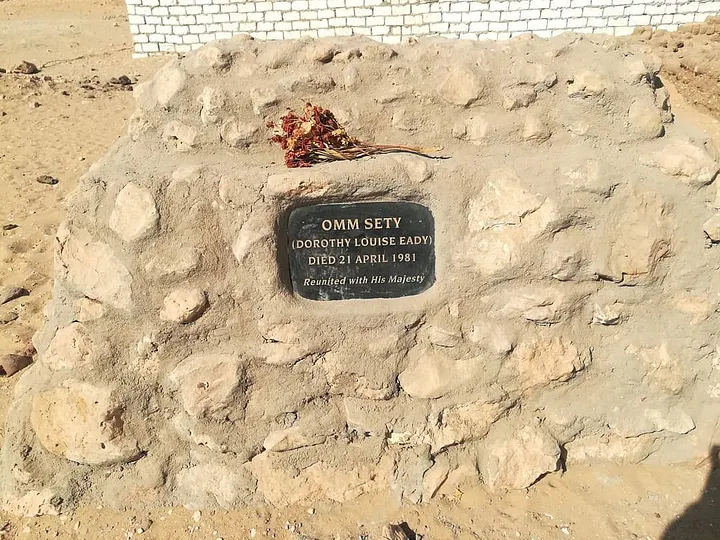
Local and International Reactions to Her Death
Omm Sety’s death was met with a deep sense of loss in both the local community and the wider world of Egyptology. In Abydos, where she had become a beloved figure, locals mourned the passing of someone who had not only studied their culture but had truly become part of it. Her unique lifestyle, humility, and spiritual devotion earned her immense respect, and her passing marked the end of an era for those who had come to see her as a guardian of the temple.
Internationally, her death drew attention from scholars and researchers who had worked with her or followed her extraordinary story. Although her claims of reincarnation remained controversial, many in the archaeological community recognized the valuable contributions she had made to Egyptology.
Respect from the Archaeological Community
While Dorothy Eady’s life was often shrouded in controversy due to her belief in reincarnation, her contributions to Egyptology were widely respected. Archaeologists who had worked with her, including prominent figures like Salim Hassan and Ahmed Fakhry, praised her dedication to preserving ancient Egypt’s history. Despite the skepticism surrounding her supernatural claims, her knowledge of hieroglyphics, temple layouts, and Egyptian rituals was acknowledged as highly valuable. The respect she earned from her colleagues and the local community in Abydos underscored her lasting impact on the field of archaeology.
Posthumous Recognition
Even after her death, Omm Sety’s legacy continued to influence Egyptology and inspire those fascinated by ancient Egyptian history and spirituality.
Continued Use of Her Research in Egyptology
Dorothy Eady’s work at Abydos, particularly her efforts in cataloging inscriptions and assisting with the restoration of the Temple of Seti I, continues to be used by scholars and archaeologists. Her contributions to the understanding of the temple’s layout, religious practices, and historical significance remain invaluable to ongoing research. Although some of her discoveries were initially met with skepticism, her work has stood the test of time, and her insights are still referenced by Egyptologists today.
Documentaries and Books About Her Life
Dorothy Eady’s extraordinary life has inspired numerous documentaries, books, and articles. Her story continues to captivate audiences due to its blend of archaeology, mysticism, and the unexplained. One notable documentary is “The Lost Pharaoh: The Search for Akhenaten”, which includes interviews with Dorothy Eady and showcases her life and contributions to Egyptology. Additionally, the book “Omm Sety’s Egypt: A Story of Ancient Mysteries, Secret Lives, and the Lost History of the Pharaohs” explores her story in depth, blending her personal experiences with Egyptological research.
Her life has also been featured in numerous other documentaries and articles, cementing her place as one of the most intriguing figures in the history of Egyptology. Scholars, spiritual seekers, and the general public remain fascinated by her story, keeping her legacy alive long after her death.
Conclusion
Dorothy Eady, famously known as Omm Sety, left behind a legacy that transcends the boundaries of archaeology, mysticism, and history. Her life’s work at the Temple of Seti I and other significant sites contributed immensely to the field of Egyptology, despite her unorthodox background. She cataloged inscriptions, restored ancient fragments, and guided excavations based on what she believed were past-life memories. Her impact on archaeological discoveries in Egypt, particularly in Abydos, continues to be referenced by scholars today.
Beyond her tangible contributions, Omm Sety also played a significant role in popularizing the concept of reincarnation. Her conviction that she had lived a previous life as a priestess in ancient Egypt captured the imaginations of spiritual seekers, Egyptologists, and laypeople alike. Her life stands as one of the most compelling modern accounts of reincarnation, drawing attention from those interested in the mysteries of the human soul.
Ongoing Debate: Was Omm Sety Truly Reincarnated?
The question of whether Omm Sety was truly reincarnated remains open to debate. Skeptics argue that her vast knowledge of ancient Egypt stemmed from her lifelong dedication to studying the subject, while her supporters view her detailed insights as evidence of something much deeper - memories of a life lived long ago. Whether her abilities were the result of intense study, intuition, or something more metaphysical, the fascination surrounding her life continues to spark discussion and research.
In the end, Omm Sety’s story blends the realms of history and mystery, leaving behind an enduring legacy that has enriched the field of Egyptology and captured the imagination of many.
In ancient places, many seek history; in the case of Omm Sety, history found her.